
 YouTube

 Spotify
Barb’s Story: From Pain to Purpose as a Town Fights for Pharmacy Access - PART 1
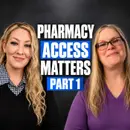
In part one, we introduce Barb Zablotney, one of the many advocates that attended a historical community gathering at Martella's Pharmacy in Pennsylvania this year. In part two, we will dive further into the community uniting to save its pharmacy access to Martella's.
When a small-town pharmacy gets dropped by a pharmacy benefit manager, Express Scripts, the fallout reaches far beyond one storefront. It can leave patients stranded, caregivers scrambling, and entire communities fighting to keep access alive. Barb Zablotny shares what happened when Martella's Pharmacy was suddenly pushed out of network, why that crisis exposed deeper problems in medication access, and how one community turned outrage into action.
Barb brings this fight to life from every angle. She is not just a patient advocate; she is also a navigating chronic pain, a spinal cord injury, and a healthcare system that often treats pain patients like a problem instead of a person. Her story shows why medication access is never just about a prescription—it is about dignity, mobility, and the ability to live a full life.
You'll discover:
Why Express Scripts dropping Martella's Pharmacy created an immediate access crisis for patients in rural Pennsylvania
How opioid stigma and pharmacy policy collide to make chronic pain treatment harder than it should be
What it feels like to be judged, delayed, or denied when you are simply trying to function
Why independent pharmacies are often the only truly accessible option in small communities
How Martella's community organized, spoke out, and successfully the issue into the public conversation
Barb also explains the human cost of pharmacy consolidation and PBM power, from reimbursement pressure to network exclusions to the quiet disappearance of local care. She and host Loretta Boesing unpack why these systems hit patients, rural families, and older adults hardest—and why fear of retaliation keeps too many people silent.
In part one, we introduce Barb Zablotney, one of the many advocates that attended a historical community gathering at Martella's Pharmacy in Pennsylvania this year. In part two, we will dive further into the community uniting to save its pharmacy access to Martella's.
When a small-town pharmacy gets dropped by a pharmacy benefit manager, Express Scripts, the fallout reaches far beyond one storefront. It can leave patients stranded, caregivers scrambling, and entire communities fighting to keep access alive. Barb Zablotny shares what happened when Martella's Pharmacy was suddenly pushed out of network, why that crisis exposed deeper problems in medication access, and how one community turned outrage into action.
Barb brings this fight to life from every angle. She is not just a patient advocate; she is also a navigating chronic pain, a spinal cord injury, and a healthcare system that often treats pain patients like a problem instead of a person. Her story shows why medication access is never just about a prescription—it is about dignity, mobility, and the ability to live a full life.
You'll discover:
- Why Express Scripts dropping Martella's Pharmacy created an immediate access crisis for patients in rural Pennsylvania
- How opioid stigma and pharmacy policy collide to make chronic pain treatment harder than it should be
- What it feels like to be judged, delayed, or denied when you are simply trying to function
- Why independent pharmacies are often the only truly accessible option in small communities
- How Martella's community organized, spoke out, and successfully the issue into the public conversation
Barb also explains the human cost of pharmacy consolidation and PBM power, from reimbursement pressure to network exclusions to the quiet disappearance of local care. She and host Loretta Boesing unpack why these systems hit patients, rural families, and older adults hardest—and why fear of retaliation keeps too many people silent.
This conversation is a warning and a rallying cry. If you care about patient rights, disability access, chronic pain, rural healthcare, or the future of independent pharmacy, this is essential listening. It is a reminder that when communities speak together, they can challenge systems that were never built to serve them well.
Barb Zablotny is a disability advocate, educator, and patient voice from rural Pennsylvania whose lived experience brings rare clarity to the fight for medication access. Loretta Boesing hosts Patients' Voices in Pharmacy, where patient stories become powerful change.
This is Part 1 of the conversation. Come back for Part 2 to hear what happens next.
Donate to support this episode at PatientVoicesInPharmacy.Com
Watch more episodes of Patient Voices In Pharmacy www.patientvoicesinpharmacy.com
Donate to Patients Voices In Pharmacy & Support Our Work: http://patientvoicesinpharmacy.com/support/
SPEAKER_00
Welcome to Patient's Voices in Pharmacy, where patient stories become powerful change. I'm your host, Loretta Bosing. Before we begin, a quick reminder the experiences shared in this podcast are personal stories. This discussion is not attended for medical or legal or financial advice. Always consult with your healthcare provider or other qualified professionals about your own situation. Today I will be interviewing Far Zablatny, who I found speaking at one of the most inspiring moments in pharmacy history this year at a community gathering for Martell's Pharmacy. This was a community that really gathered in a historical way to save Marcellus Pharmacy after express scripts who dropped Martell's from the network, impacting thousands of patients, nursing homes, and retirement communities. There was so much more to Barb that I would uncover, and I'm excited to share what I found out with our listeners. BARB, welcome to Patient Voices in Pharmacy. I'm so glad that you're here. Before we talk about Martellos Pharmacy, pharmacy benefit managers, or the challenges patients face accessing their medications, I want our listeners to get to know you, the person behind uh some of this advocacy. First, can you tell me a little bit about yourself?
SPEAKER_01
Yeah, hi. So first, I want to thank you for the invite. Super sweet of you. And yeah, so my name is Barb. Let's go to the beginning a little bit here for some context, right? So when I was 21 years old in the year 2007, I was involved in a motor vehicle accident. I hit a patch of black ice, lost control of my vehicle, and I was paralyzed on impact. So that means I use a manual wheelchair every day. I cannot stand, I cannot ambulate, I cannot um, I don't have bowel and bladder control. So I'm pretty much paralyzed from the waist down. That same year, my mom died suddenly in her sleep with no, you know, pre-existing issue that would prompt that. And the year after my fiance at the time and I separated. So for someone who's 21, 22, 23 to go through all that, that's a lot to handle. So for about the next decade of my life, I just struggled with depression and was just trying to figure out this new normal and how to live my life. And in there, I ended up deciding to uh compete for the title of Miss Wheelchair Pennsylvania 2018. And somehow I won. I really wasn't going into it thinking I was going to win or anything. I thought, well, it'll be a funny experience. Maybe I'll make a friend or two, whatever. And I ended up winning. And I'm like, hold now, what do I do? And that whole 10 months I served as a title holder for the state of Pennsylvania. I really spent the time to get to know the disability community because I spent the majority of my time as a wheelchair user just assimilating with the able-bodied world and what I already knew. And I didn't necessarily understand disability culture or disability perspectives and the struggles other people with disabilities face too, not just myself. And here I am with a platform that I'm supposed to, you know, help disabled people. So I thought it was very important for me to hear other stories and understand that and be a voice for them throughout my reign. And so I went on to compete. I took home the People's Choice Award at Miss Wheelchair America, and I left the experience profoundly impacted and changed that I think I just found my niche and what I wanted to do. Before I was disabled, I was a certified veterinary technician, and I only had five weeks left until I graduated, and all that was was an internship, and that involved use of your whole body, and so that could not be done. And so I was never given that degree, even though I technically earned it for the most part. And so um I had no idea what I wanted to do anymore. I just was trying to figure life out. And at that point, I realized what I think this is what I want to do. I think I want to like advocate for people and and whatnot. And so I got involved with nonprofits and everything, and I ended up starting a chapter for United Spinal here in rural Pennsylvania, and that's where I went to an event called Roll on Capitol Hill. And it was then that I really understood that I think I want to be like a professional advocate if that's possible. And I'm like, I don't know. And so I just kind of was going along trying to learn and figure things out with the nonprofit world when I was at an event called an abilities expo, and I stumbled across William Patterson University, who had something called a disability studies major. And I was like, oh, this what is this? And as I look more into it, I realized this is how I can be an advocate, right? I can learn more about things in an academic sense and apply them to real life. And so I went on and I got my bachelor's degree from William Patterson University, got my master's degree from CUNY School of Professional Studies and Disability Studies. And I am now adjunct professor at William Patterson University of New Jersey teaching disability studies. And so that's kind of been my life, if you will, in kind of a a brief overview of it.
SPEAKER_00
That's a lot. That's what a major accomplishment through everything and just to see you growing so much through all that. I can just imagine all the growth that took place and to see where you're at today. Do you think you would have been in that position where you are today without the the event that happened that changed everything?
SPEAKER_01
Honestly, no. I don't think so. I don't think anything would have really put the disability community on my radar before. Um, which is funny because like my family, my grandpa actually was paralyzed and lived with me and growing up, and I still didn't know what paralysis was. I still didn't understand disability. It was kind of like a, oh, he's an old person thing. What I mean. And so I just never, I guess, had it on my radar. I would say that it it was a lot of unconscious biases happening too that we're fed as a society and we just kind of internalize and we don't necessarily are always cognitively aware of it. And I think I ended up becoming kind of a victim of that. And then here I am paralyzed, and I'm I'm having this unconscious bias with myself. Like I didn't feel like I was enough to do certain things because now I'm disabled, right? And so it was, it was definitely a large process of mentally taking it all in and learning. And I think just going through my educational journey really was an eye-opening experience and definitely profound for me to understand how all these systems kind of come into play, which is kind of, you know, it all kind of culminates into the whole pharmacy thing, if you will.
SPEAKER_00
Oh, I can't wait to get into that discussion with you. Yeah, you are more than enough. You have proven beyond that you are more than enough. And it's just that your story is so inspirational. And you've spent so much time advocating for patients, but you've also experienced a healthcare system as a patient. You've seen issues yourself. Would you mind sharing what had happened when do you struggled to obtain some medication that you needed?
SPEAKER_01
Yeah. So I'm gonna kind of give a background on this because I think there is almost a discussion within a discussion, if you will, to bring the nuance into this topic. Because again, there's biases that are gonna happen as I tell my story and I want to address those head on so people can work through that with me. So just give it a warning here. So when I got paralyzed, I broke my back. And back in those days in 2007, the surgery that I needed to fix the broken vertebrae didn't exist. They didn't, they weren't doing replacement discs or whatever. And so essentially I'm living with a broken back still. My T11 vertebrae shattered out to back, like the back side of it. And so as a result, I don't really have a full T11 vertebrae, and my T12 was cracked. And so, um, and that shattering is actually what caused my paralysis of the spinal cord injury. And so at that point, I when you have a spinal cord injury, you also have typically, not everyone, right? We're not monoliths. Um, you you typically have neuropathy pain of some sort. And that also accompanies things. And when I walked for 21 years, I remember I had a job at a movie theater and I would sit all day at the movie theater selling movie tickets. And after two hours, my back would kill me sitting. Okay. So take into consideration sitting for 19 years and not being able to stand up and not being able to relieve the pressure, not being able to do any of that, and you have a broken back, right? So I'm living in chronic pain. And I think that that's something that I think there's a lot of people who deal with chronic pain. And I think this is a very nuanced topic, of course. And I think it's something that I had to personally make a decision for myself. Do I want to forego treating this pain and just lay in bed and not have a quality of life? Or do I want to use some type of medication to get me out of pain so then I can go live a quality of life? And while I understand all the side effects, the other aspect is just laying in bed in pain and not having a quality of life. And so at 21 years old, I'm and also it's 2007, which is the height of the opioid epidemic, right? And for background also in here, my dad is a pharmacist. And I think I had an education that other people don't have by default, right? Because my dad is a pharmacist. And so I think he made sure I was on specific medications and didn't overdo it or anything like that. And as a result, I have to take an opioid in order to have a quality of life, to be a productive member of society. And obviously, you're sitting here talking to me. Do I look like I'm the stereotype of what people think when they hear opioid or they think of a pain medication, right? And so I say that I take it so I can be like be functional. And so I have been on this medication for the same dose for well over a decade. And again, I take it as prescribed. I sometimes don't, I sometimes don't take a dose here and there even, but I take it as needed. And when when um express scripts, I was gonna say, when the PBM, but Express Scripts, when Express Scripts ended up pulling their and dropping Martellas as a provider, which is Martellas for background, is my pharmacy of choice. It is a small independent pharmacy here in um Pennsylvania. And when they did that, I no longer could fill this prescription. And I was like, okay, and they're saying, okay, you guys need to transfer your prescriptions to either Walmart or a grocery store called Giant Eagle, which is now owned by Kroger's. So that is, those were the options. There's no other options in this area that for independent pharmacies. Now, unfortunately, when it comes to an opioid script, apparently providers have a limit of how many opioids they can fill, which I didn't know. And so now this all happened right when Rite Aid closed. So these two pharmacies got all these right aid patients, and now they're getting all these Martella patients. So when I call to ask about it, I'm told that one place was like, Yeah, we are at our capacity for that. Good luck. I'm like, oh great. Okay, this is great. Then the other one was kind of iffy because apparently the pharmacists can choose if they don't want to fill an opioid script if they don't want to, which I was like, what? So at this point, I'm thinking, what am I gonna do? Because my insurance was covering this. And at this point, we were dropped without even being told ahead of time. It literally happened overnight. We were given no forewarning. It just happened overnight. And at that point, it was like also the day that my my script should be right. And so at that point, Martellas was like, Well, yeah, pay cash until we figure this out. It's gonna be figured out, obviously, quickly.
SPEAKER_00
And so
SPEAKER_01
yeah, like they thought this was gonna be a very quick fix. And so, well, as it should have been, right? And so as time went on, I was like, all right, we'll pay cash. And it was over a hundred dollars for this script. And I'm like, okay, let's just hope this gets fixed.
SPEAKER_00
Yeah, the
SPEAKER_01
next month comes, same thing. And as the months kept going, that's what it was. And as I continued to call these places, I was given random excuses, and it was clear I was dealing with quite a stigma of who was on the other end. And it was very people were very short, they were very rude. But one person hung up on me the one time, and I'm just like, okay, what am I supposed to do here? What am I like? This is wild.
SPEAKER_00
Um
SPEAKER_01
and so that is kind of where I found myself in the mix of this.
SPEAKER_00
Yeah.
SPEAKER_01
Here's the thing, too, is they're like, oh, do mail order. Well, you can't do mail order on a controlled substance, and so I couldn't even do that. So what are my options? So and now I'm paying cash for opioid script, which they also say you shouldn't do. What
SPEAKER_00
do you have at this point? I mean,
SPEAKER_01
what is what do they expect
SPEAKER_00
people to do? I mean, this is a major issue here a lot. So I'm so thankful that you're so brave to come out and to share that personal story and believe you're speaking for so many other patients that are battling real chronic conditions and cannot get relief from their pain because of these barriers and like these network issues that really should not have ever occurred in the first place. And I do I'm very concerned about how many other patients there are facing the same. What happened? So when you needed that pain medication, but then you had all those obstacles in getting it, what was going through your mind during that time?
SPEAKER_01
I pretty much was like, what? Like, I can't survive. Like, and I think it's really important to center this too in that these medications exist for a reason, right? And it's a very pure good reason. The problem was is we had a couple bad actors that ruined it. Because the, for instance, the prescription that I'm on, it's like been around since the 30s, 1930s. And so this isn't some new substance out here. It's always existed. The problem, again, comes down to the bad actors, whether that be providers, whether that be, I guess, some pharmacists were bad actors in there, whether that be patients. And I think at the end of the day, they were sold the whole story of around. It started with oxycotton because I think it's extended release, if I'm not mistaken. So it was a different mechanism of action compared to previous ones. And so I think that that's where people, it kind of spiraled out of control because they were the company that made this medication lied to everyone saying that there was no addiction issues and no, and so it was deceptive marketing that they knew was wrong, right? And so you have a bad actor with the pharmaceutical company, you have a bad actor with the I I maybe some of the pharmacy sales reps knew. I I think some of them were also maybe
SPEAKER_00
unaware
SPEAKER_01
as well, because they were just taking what they were told because they're not the experts they're learning from their employer, right?
SPEAKER_00
And
SPEAKER_01
so I don't want to put them all into a category, but it's they've proven in court that the the company knew. And so I think at the end of the day, that is something that we need to always remember when we think of this pain management, is that it exists for a very good reason and a very needed reason. And I've now, because of this opioid epidemic crisis that has happened, I have heard older people that are having surgery and they're like saying, No, I don't want that, I don't want to be addicted. They're so scared.
SPEAKER_00
Yeah.
SPEAKER_01
And so they're suffering through procedures when they don't need to.
SPEAKER_00
Yeah.
SPEAKER_01
Because as long as you're taking it as prescribed and you are not abusing it and your doctor's not giving you an unruly amount, you should be fine. And I think that's the part, all the studies pretty much indicate that. And I think that's something that we as a society need to realize is that there is a pure reason for this medication. And that that stigma that comes with it is unfortunate because I'm seeing in the disability community it having very real consequences. And a lot of times I have seen stories in these spinal cord injury groups and stuff when a provider just decides to stop prescribing because of all the regulations happening on them that people are choosing to take their lives.
SPEAKER_00
And that's
SPEAKER_01
the problem that it's like really like what other option did they feel like they had? And I understand being stuck in that rut. They're in pain, they have a neurological condition. It's not just uh, you know, stubbed toe here. This is
SPEAKER_00
for sure. Definitely not.
SPEAKER_01
I mean,
SPEAKER_00
for you, what was the most difficult part of that experience for you? What was the moment when that felt the scariest or the moment when you were the most concerned?
SPEAKER_01
Honestly, I feel like the whole thing was very overwhelming. And again, thankfully, I have the privilege of a dad who's a pharmacist who can help me navigate some things, right? And I think that helped my anxiety a little bit. However, I think the worst part is just feeling that discrimination and that that instant whatever drug-y and hanging up, yeah, the rudeness of people of just acting like you're like a junkie or something. Like, and it's just, are you kidding? Like, I think that's the part that bothers me. And I think that's the part that is also harming people and just preventing them from treating their pain after major procedures. And
SPEAKER_00
then,
SPEAKER_01
you know, I have been a victim in a hospital where they decided to not give me any medication after a major abdominal procedure because of that specific resident having those biases. And I think it's harmful on so many different levels. And I think, again, I understand their concerns 100%, but there is so many regulations in place now for the doctors and for the pharmacists and for everyone involved that it is not like it once was. It is not as easy to abuse as it once was.
SPEAKER_00
Yeah, and there's no reason to let people suffer needlessly. I'll have to share when my son was in the hospital recently. He was in the hospital for a couple months. There was a moment when he was in so much pain that he could not participate in physical therapy. He needed more pain medication, and what he was going through was very painful. And I remember at one time I just said he needs more, more pain medication. They said, Well, what is his pain level? And they're like, It's out of three. And they're well, three, okay. I knew that his pain scale was way off
SPEAKER_01
because
SPEAKER_00
I knew at his three, if I tap the bed, he was in pain and asked me not to tap the bed. And he certainly wasn't going to get up out of that bed, participate in physical therapy, and do what he needed to do to be able to get discharged from the hospital. So I finally figured out that the hospital that we were in, in order for my son to get the pain medication that will allow him to do the things that he needed to do to be able to get out of the hospital and to improve his health condition, I would have to ask for a consult for pain management because without that, all that he could have was Tylenol, Tortle, and anyone that knows anything about transplant recipients, that's not the best medication for them, that the Tward all, at least that's what the team says. So I don't know why everybody's different. But yeah, it's just make it make sense and don't allow, I mean, children to suffer, patients to suffer needlessly. There has to be some change. And I I love that you're well balanced and I try to be as well. Like you can see where these issues came from and also the problems with the system and how do we meet in the middle to make sure that their patients aren't suffering needlessly, but yet there's still people being accountable for being bad actors too. So
SPEAKER_01
exactly. But
SPEAKER_00
we definitely have some areas to improve there.
SPEAKER_01
Oh, for sure. And I think it's so important that people remember like this all started like in the early 2000s, happened to be around the time the PBMs came around, too.
SPEAKER_00
Yeah.
SPEAKER_01
But um, all this happened in the early 2000s. And it it all became like to the light through like let's say 26 years. While things came to the light, there have been different protocols put into place and different restrictions put on place and different regulations put in place. It wasn't like everyone was just sitting there twiddling their thumbs, not doing anything. There were things being done to combat this opioid epidemic head on, right? And so we need to remember that it's no longer the year 2000. Um, there have been a lot of things that have changed. And if somebody is prescribed a medication through their provider, there is usually a good reason. If there is another concern, perhaps take it up with the provider. But beyond that, I don't understand why people are acting like it's still the year 2000 and there's people opening up shop at midnight to selling scripts to people to have unlimited, you know, oxycontins or whatever. That's not happening anymore. If it is, you might want to call the authorities if you're aware of it happening.
SPEAKER_00
Yeah.
SPEAKER_01
But at the end of the day, it's that's not happening. We need to remember that we as a society did put things in place to fix those problems and those issues that we are concerned about. And this is what it looks like now. And so moving forward, I feel like okay, we should know that moving forward, and we should be not letting a child suffer in a hospital setting like that. Like, why are we why it causes trauma when you are in pain and you're not being treated for it after some procedures and everything? It causes medical BTSD pretty much. And so at the end of the day, why are we traumatizing people when we as a society figured out how to fix the problem? We just need to do it in a way that is regulated and is on the up and up. And I think that's where there's a disconnect. I feel like a lot of people aren't aware of all these regulations that have been put in place. A pharmacy can't have fill X amount of scripts like per population. Like that's wild, right? And there's so many different things like that that are in place. I mean, every month my doctor has to send a whole thing about a DEA form to the pharmacy to ensure that it's right, right? And so I think that there's just so many steps now that it's not easy to abuse like it once was. And I think we need to remember where we came from so we never go back, of course. But we also need to take that be glad as a society we found a middle ground and that we are living in the middle ground now. And it is okay to be treated, to get out of pain, and to have a quality of life and in your son's circumstance, get better so he can get out of the hospital and not be left with trauma at the end of the day. And I think, I mean, it's it's just not a it's just not a positive thing that we're doing as a society overall. So I think um that's the part with my story that I think is harder to really tell in a short format because I have to talk about this stigma that goes into it and understanding that the stigma is also part of the reason why another pharmacy that's a corporate pharmacy is can their pharmacist just can say, No, I don't want to fill this script today. And that's an that's comes from stigma or against their beliefs or whatever. And so I think that that's really important to kind of understand that nuance with my story is understanding that and understanding that there are long-term confli or like issues that result as yeah,
SPEAKER_00
the repercussion of that. Yeah, I got it. Yeah. So that's you've done such a great job of explaining that, and especially people need to understand if you, as a daughter of a pharmacist who know the system the system well, that you didn't even realize like how broken it was until this issue happened where express grips took Martellas out of the network. When you had to learn to navigate that, I am so concerned about how many others in that area did have that same issue. And I think by you speaking up, you're going to inspire them to also speak up and hopefully tell their story too, because this is this is real harm. This is patient harm at this point when patients aren't able to get the medication that they need. It's unethical and it's not okay.
SPEAKER_01
And
SPEAKER_00
I believe you answered my next question about what do you wish healthcare professionals and policymakers understood about patients who need pain medication. You did a great job of answering that. I truly believe that what you're saying is, and correct me if I'm wrong, is that we have now the safeguards in place that we don't need the stigma any longer that goes along with it. If the doctor prescribed it, it's okay to look at it, but understand that most likely if the doctor has prescribed that prescription, it's for a reason and trust the doctors. Now, if they're getting an influx of the same script from the same doctors, I'd understand why they might put that. But for the most part, like you said, look at it for the most part that these are needed for these patients. So
SPEAKER_01
exactly. And the the doctors who do prescribe it a lot are probably pain management doctors, right? And that's kind of what they do.
SPEAKER_00
And
SPEAKER_01
even then, to like go to a pain management clinic is is a feat in itself for somebody in my situation. And it's it's ways that I just never thought, like, my brain just doesn't work that way to like, oh, I'm gonna get one over on somebody, right? And like when I'm told that I have to, so I use a fully catheter with a bag on my leg. Apparently, that may not be my urine. So you have to remove it and then have to wait, and then you have to then put a new catheter in or have them catheterize you to get the the sample to make sure I am taking the medication and not selling it or something. And I think that's another aspect, right? That's invasive, that's a lot to do just to make sure, again, it's not being abused. And again, more safeguards in place because there were patients that maybe did qualify to have them and then they were selling them.
SPEAKER_00
And
SPEAKER_01
so I understand their need to do these things, and I get it, but at the end of the day, I don't think people understand all that goes into
SPEAKER_00
yeah, yeah, you're definitely going out just to get the medications you need to be able to function at your best and to be able to live the best quality of life possible. And we don't want patients to have to give up, like you had mentioned, or be in pain, or not be able to get access to the medications to help them thrive. And so thank you so much for sharing your personal part of your life and your experiences. It really does help us understand why medication access is about so much more than just prescriptions. It's about people living with dignity and just being able to get the care that they need. And your connection to this issue, I did not know you were the daughter of a pharmacist. So I didn't know when I first outreached to you. So that is just a bonus that's going to help us in the next part of this story. And it's personal because of your dad and his lifelong dedication to pharmacy. So I'd love to talk to you about Martell's pharmacy and the community that came together to stand out for it in this next part. Look forward to having that conversation with you. And we will have that in a part two. Thank you for your time today and for coming on. You are such an interesting person and you're such a passionate advocate. If today's episode resonated with you, please share it with someone you care about. These stories matter, and the more we amplify them, the more we can create change. If you feel called to support this work and help us continue sharing patient and caregiver voices, you can make a donation at patient voices at pharmacy.com. And if you've ever felt unheard in your healthcare journey, know this. Your voice will always matter here. Because at the heart of what we do is this true belief that when patients' voices are finally heard, when caregivers' voices are finally heard, that the system will be changed. So keep getting loud. Thank you so much for your support. Until next time, I'm Loretta Bose reminding you that your story has the power to make a difference.