

 YouTube
 Spotify
 Payton's Voice: A New Heart. A New Fight.
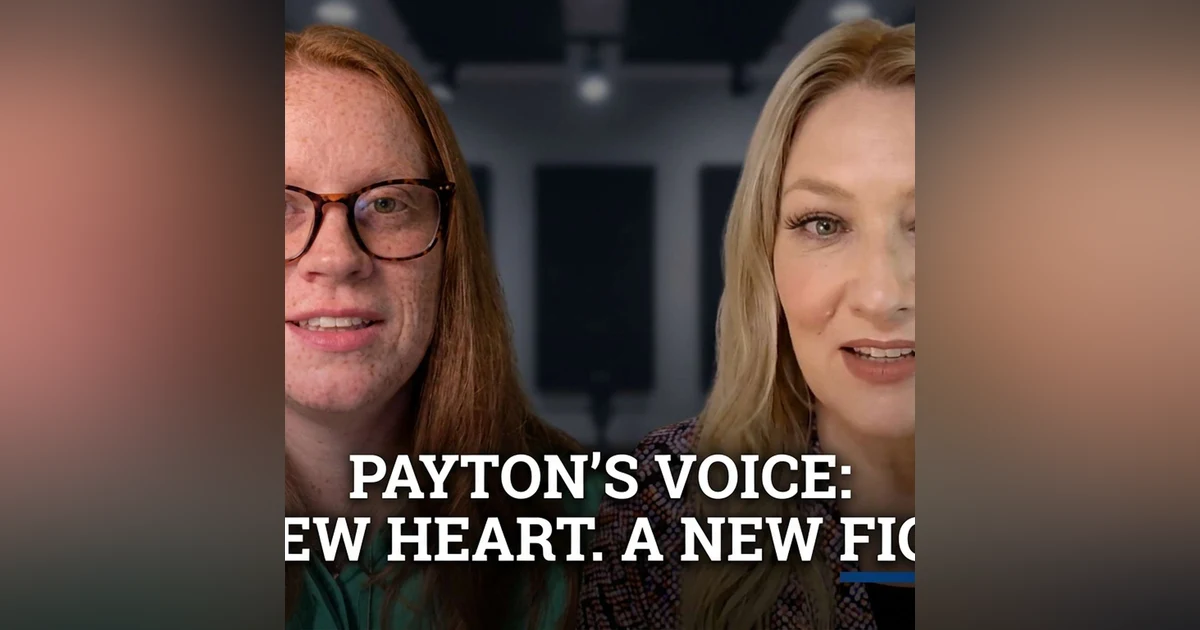

What happens when a life-saving medication is approved… but still out of reach? In this conversation, Payton shares the reality of transplant life, insurance denials, forced mail order, and the fight to protect the gift of life. This is what access looks like when the system fails patients. ❤️ Support the show Watch more episodes of Patient Voices In Pharmacy www.patientvoicesinpharmacy.com Donate to Patients Voices In Pharmacy & Support Our Work: http://patientvoicesinpharmacy....
What happens when a life-saving medication is approved… but still out of reach?
In this conversation, Payton shares the reality of transplant life, insurance denials, forced mail order, and the fight to protect the gift of life.
This is what access looks like when the system fails patients. ❤️
Watch more episodes of Patient Voices In Pharmacy www.patientvoicesinpharmacy.com
Donate to Patients Voices In Pharmacy & Support Our Work: http://patientvoicesinpharmacy.com/support/
Follow Payton's journey: https://paytonsnewheart.com
SPEAKER_01
Welcome to Patient's Voice in Pharmacy, where patient stories become powerful change. Before we begin, a quick reminder the experiences shared in this podcast are personal stories, and this discussion is not intended as medical advice. Always consult with your healthcare provider or other qualified professionals about your own situation. So today I am honored to welcome Peyton Harris to the podcast. Peyton is a heart transplant recipient, patient advocate, and powerful voice for patients navigating the challenges of our healthcare system. Her firsthand experience has given her a unique perspective on what it means to rely on like semi medications while facing insurance barriers, prior authorizations, and the uncertainty that too often comes with accessing the treatments patients need to survive. Today we'll talk about her transplant journey, the concept of ghost approvals, the emotional toll of just fighting for medically necessary medications and what needs to change so that patients can access the treatments they depend on without unnecessary delays. Peyton, thank you so much for joining us and for sharing your story. First, can you tell us about yourself and your heart transplant journey?
SPEAKER_00
Sure. My name is Peyton Harris, and I received a heart transplant when I was 11 years old. I was born with a rare congenital heart defect called Epstein's Anomaly and Wolf-Parkinson White syndrome. That would basically lead me to supraventricular tachycardia, which made my heart go 250 beats per minute. And when that happens, I would have to go to the emergency room and they would either have to stop my heart with a drug called adenosin or cardioversion. Had two heart surgeries when I was seven years old and ten years old, and that didn't work. They also found a blood clot in the right atrium of my heart, and we went to Michigan and they dissolved the clot, but they realized my heart was in bad shape that I needed a transplant. So we transferred back to Cincinnati Children's, and I was listed on the heart transplant waiting list at status 1A, which is like the highest. I only waited for nine days on my heart, and I got my heart on March 8, 2012.
SPEAKER_01
Wow. So what was it like the day that you received the donor heart? Do you remember that day? I do. You got the call?
SPEAKER_00
Yeah. So I was only 11. My parents got the call around 6:30 in the morning. I remember my nurse coming in. She telling me I couldn't eat or drink. I'm like, okay, why not? She didn't really say anything. I FaceTimed my parents to my little iPod touch at the time. My parents were on the way to Cincinnati Children's. I told my dad, hey, the nurse said I can't eat or drink. What's going on? He's like, well, we'll be there soon to tell you. They wouldn't tell me. Um, I told my dad, like, I bet I got a heart. He didn't say anything, but once I got into the once they got to the hospital, they told me they they found a donor heart and they called them at six in the morning. The surgery will take place at 11 a.m. that Sunday on March 18th.
SPEAKER_01
Wow, what an amazing story already. We're off to a great start. I love hearing it. I just remember from a parent's side what that feels like as a patient to actually remember that as a child. That had to be such just such an amazing moment, just such a sweet, precious moment to share with your family. Yeah.
SPEAKER_00
Because I didn't know what was going on.
SPEAKER_01
Yeah, I mean, at the same time, I imagine a lot of transplant patients prior to getting that gift of life, it's probably also mixed emotions. Yes, you're so thankful. But then at the same time, it's probably also it's a huge surgery. It has to be a lot to just take in. So a lot of people they think that once you get the transplant, and recently with a group of women, someone said, Well, I thought once you pass the first year or two with the transplant, you're good to go. There's nothing else you have to do, no more troubles. And so, is this the finish line?
SPEAKER_00
Once you I wish it was like that, but no. A transplant comes with a lifelong of taking immunosuppressive drugs for the rest of your life on scheduled time. You can't miss a dose. Uh you gotta keep track of your refills. I don't know how much your son takes, but I take like 13 pills twice a day. Gotta do biopsies, PET scans, cardiac follow-up with Cleveland Clinic, um, blood work. It's a lot to go through. I also have chronic kidney disease because I cyclosporin causes kidney damage, kidney toxicity. So I have that. So I also see a kidney doctor for that. It's a lot. I mean, it gets easier, but it's not like a cure.
SPEAKER_01
Right. Yes, and my son's not on that many medications. Now he was after we got out of the hospital recently. So, for those who don't know, my son is a liver transplant survivor, and absolutely it's a lot still keeping up on the medications and just trying every month we don't know what to expect, spelling the medications. Uh so it's not just okay, transplant, done, no more worries. In fact, now for a lot of patients, it ends up being another fight for life just to get the access to those medications or to actually get them in your hand. So, what happens if transplant patients miss doses or they can't obtain their medications?
SPEAKER_00
What happens if they miss their doses? A lot could happen. I don't want to find out, but if you don't take your anti-rejection drugs, your blood levels aren't gonna be where they're supposed to be.
SPEAKER_01
I don't want to second transplant rejection, the gift of life that someone was so gracious to give, can be gone. And and my understanding is it can happen over a few days. It's just not it's not worth the risk. It's important that transplant medications are accessible after we get the gift of life, right? So in our recent article, you introduced the term ghost approval. Can you explain what that means? You know, if if you want to go into first like some of the issues that you had in getting your medications. I know you had mentioned that you were told that your medication is what's covered, but you still weren't able to obtain it.
SPEAKER_00
Can you can go into that a little bit? Sure. So I've been taking a drug called Everolamus, it's an anti-rejection drug, and it also uh protects against cardiac algorithm bastillopathy, which is like a long-term um chronic rejection for heart transplants. And I've been on this drug basically my entire transplant, and I've been with Anthem, Blue Cross, and Glucia my entire life until last year in February 2025. They sent me a denial letter saying it's no longer medically necessary because I didn't have a kidney or liver transplant. And I went through the appeals process. My transplant team at Klema Clinic sent multiple prior authorizations and peer-to-peer reviews, and Anthem just kept coming back with denials, and I was almost out of the medication. I was like less than a week, just a few days away. For a transplant recipient, that is scary and life-threatening. I posted that on Facebook, it got a few thousand shares. I think it was like close to 5,000 shares, and it's awesome, but I wish it didn't happen that way.
SPEAKER_01
I know, yes, you're right. Yes, I agree with you that it shouldn't happen that way.
SPEAKER_00
Yeah, but um after public pressure, they approved the medicine, but then they placed it on a very high cost tier. Cleva clinic sent a prescription to a local pharmacy near me because I was literally almost out and mail order wouldn't get there in time. My parents and I stepped into the pharmacy, and Anthem wanted me to pay $350 for a 30-day supply or $1,000 for a 90-day supply. My parents and the eyes got really big, we're like, whoa, we never paid that amount ever. And luckily, my dad knows the pharmacist there. They went to high school together. Her name's Elaine, and she helped me get good RX coupons, which made the cost go down about like $86. But we were able to get the medication, but I had to use coupons, and I've talked to other transplant recipients, and sometimes they told me, like, oh, they wouldn't let me use a coupon because I didn't have a kidney or liver transplant. That's just so scary to me.
SPEAKER_01
Yeah, it is absolutely scary. And do you mind sharing how old you are?
SPEAKER_00
I'm 26 right now. I was 25 years old when this was all going on.
SPEAKER_01
Okay, all right. Yeah, that's my consent. My son now is 16 and trying to prepare him to handle more of this on his own. I'm just trying to that amount of money for someone. Yeah, yeah, absolutely. Thankfully, you have those parents to help you out. Some people they don't have that extra help, and you had the help of a great pharmacist. Hats off to the pharmacist that helped you too, because not every pharmacist has that time or will take that time. And that's why I always say having a good pharmacist is just as important as the surgeon that performed your heart surgery without medications. That transplant will not continue to thrive. So thank you to our pharmacist. I'm always a huge supporter of our pharmacist and love hearing stories where they're helping people because that's this is why it's so important to keep that relationship with the pharmacist. How much time did you spend trying to navigate the insurance process instead of focusing on your own health? You mentioned you have other health issues going on, and I mean, just to think about the toll that that would take physically and mentally.
SPEAKER_00
So it's been going on for a year now. My first and I level letter was in February of 2025. It's a lot. I remember I cried at work because it just felt like nobody was listening to me. Like Anthem didn't care, like you're you're just another paperwork or check mark or whatever Excel spreadsheet on our list. And it just felt like a slap in the face because my donor mom donated her son's organs, other people could live. And here you got an insurance company just saying, nah, we don't care. It felt like a slap in the face, and it was a lot. It just it really felt like my life didn't matter to them. Like, if I died, like I this may sound brutal, they would probably be happy, like, oh, we don't have to spend any more money on this person.
SPEAKER_01
So, would you say at times it almost felt like the system expected you to just give up? Like, just to stay many times, yeah. But I didn't, I kept going, and you're still going, and you're helping so many people. I know you had mentioned the the people that are sometimes asking, Why are you fighting so hard? Just comply with the system. You're fighting for your gift of life, and honestly, you have so much support. You have a lot of people that are supporting you and watching you, and and really hoping that you win this, not just for you, but for everyone who needs access to that medication. If it's worked so well for you, there's no reason why you should have to change just for the profits of an insurance company.
SPEAKER_00
Doctor told me, like, it's too risky to switch medications, you're at a risk of rejection and other issues. I had rejection problems on other meds like tacro, is it tacrolimus? Tacro, yes. Yeah, I didn't do well on that one, so it's just too risky.
SPEAKER_01
And you mentioned cyclosporin as well.
SPEAKER_00
Yeah, I'm on that right now.
SPEAKER_01
Yeah, those are two that my my son had taken. He's still on the tacro. It's important that the doctors know what works best for you and that they're able to prescribe that and you're able to get the medication and the access of the and it the reason why they prescribed the Everolamusin was because of the other health issues. Why, you know, they call this off-label prescribing, right? Because it's the medication was initially for liver transplant recipients, kidney recipients, right? And correct me if I'm wrong, but is off-label prescribing uh so uh common in transplant medicine.
SPEAKER_00
I think it's because it's each patient is uh it should be individualized care. One medication may not work for your son, like the same regimen that I'm on may not work for your son. It's and also heart transplants are like smaller population. I was talking to Cleveland Clinic doctors, it's just there's not enough funds for all these studies for FDA label approvals for heart transplants, and that's why it's so common. But he did say it works well with heart transplant patients. Unfortunately, insurance companies like to weaponize the FDA label on us.
SPEAKER_01
Do you feel like the insurance company understood why the transplant team chose the medication, or do you just feel like they were just going through the process of denials because you weren't inside their box, it didn't fit in there perfectly.
SPEAKER_00
When my Cleveland Clinic doctor did a peer-to-peer review, I guess that's where your physician talks to a doctor at an insurance company, not even right after they hang up, they denied it. So it's like they're like, Oh, it's not for this specific use. You didn't have a kidney or liver transplant. And sometimes I do wonder if AI is part of it too. Because there's some times where I would send my appeals and then I come back with it with an answer that had nothing to do with my appeal. It's like we don't need two exceptions, right? It's so frustrating. I get the same copy and paste answer every time I wow.
SPEAKER_01
So did you appeal on your own at all, or was it always with a provider?
SPEAKER_00
A transplant team would try to appeal, and I tried my own appeal, that didn't work. And when my story went viral, Horace Bacari from Claimable started helping me appeal. I mean, it was so much like executives and who to email. He did like an appeal packet for me. He must have like spent a lot of time on that, and we sent it to Anthem, and they would either ignore it or come back saying, Well, this is not part of your plan. It's really frustrating.
SPEAKER_01
I'm so glad that you mentioned him. Morse is someone I didn't connect with. I did speak with him uh a while back, maybe been a couple years ago. But I'm so thankful for the work that he does. And for those who don't know, Morse fights the denials using AI. A lot of the claims, like you said, seem like they're AI denial. So he fights them with AI. He has worked for insurance companies, he knows a lot about it. So if you are having issues with denials, I would strongly suggest claimable. Definitely give them a try. I'm not getting paid to say that at all. It's just something I just really appreciate his work. And I love that he connected with you. You know, I think during that time my son wasn't doing so well. But if I would have that that was definitely someone when we see patients having these issues, that we need to have them reach out to. So on a on a more personal note, you wrote about just crying at work because you didn't know, and you you mentioned that earlier too, you didn't know if you'd receive your medication. Can you like just tell us about those days?
SPEAKER_00
Those days were exhausting, and I felt a little embarrassed because I had my door shut and I was on the phone with my mom because she tried to call Anthem for me because they still wouldn't listen. I remember my coworker coming in and she saw me crying and she's like, What's going on? And I told her, like, Anthem keeps denying my anti-rejection drug, and I'm getting to the point where I'm almost running out, and without it, like I'm gonna die, or something catastrophic's gonna happen. It it was really stressful. I would sometimes I would tell my parents, like, this has been even more stressful emotionally than going through the heart transplant itself, and a lot of people are like, Wow, that says a lot.
SPEAKER_01
It really does because it's uh it's a fight for your life again. It's the fear of your life ending because you know without those medications what can happen. And I love that you had mentioned the toll that takes on your mental health. Absolutely. I've seen people say I've had to be prescribed additional medications just to deal with the issues that I'm having and getting my medications from the pharmacy or being able to get them covered by the insurance. It just doesn't make sense for it to continue like this. And I just feel just so sad for the patients that don't know how to navigate it and haven't been able to go out there and you have spoken so bravely, and your story took off. But not everyone always gets that. So thank you again for being a voice for them. So that was another just beautiful moment in your story. And I think when I first read this, I like had almost come down to tears. I'm just like, this is just too sweet. Your donor's mother offered to pay for your medication. Oh sweet.
SPEAKER_00
I just that broke me because she should not have to do that and save her son's heart twice because of an insurance company. And that just tells me like this situation is really messed up. It really does make me mad.
SPEAKER_01
It is, for sure. And I'm sure she felt the same. That moment of doing that and not wanting the the gift of life that you so graciously give. I just I can't imagine. I mean, how disappointing it would feel about about life in general, about the system and how how much needs to change in order to in order for it to be a more functional system. How that moment, how did it change just how you viewed advocacy in general, thinking about the mom being willing to offer to pay for your medication?
SPEAKER_00
It made it more personal, and I felt really bad because here I am like trying to live and I'm begging for help and nobody's helping me, and Anthem keeps denying me and throwing more barriers at me, and I just felt I felt really bad. I thought to myself, I can't be the only one this is happening to. At first it felt like Anthem, Anthem's against me, they have something against me. But as I like my story reached more, and I reached out to like transplant groups on Facebook, it seemed like it's a common issue for some reason. And I had told myself, maybe I can use my story that came something painful and terrifying and make it to something that can come out good and powerful. So I decided to use my story to help others so nobody has to worry about losing access to their anti-rejection medications.
SPEAKER_01
I hope the most success for you in that. I really do. So your insurer you mentioned earlier had suggested melt order, and you said, ah, that's not an acceptable option for me. That's the way I feel with my son, and I fight it with everything I have. And I know a lot of people use meltwater, and that's what works for them, and they're willing to take the risk.
SPEAKER_00
I had a lot of issues with melt order, so we did try it a few times, and instead of my medications being delivered to my uh dad's small business, it got delivered to the wrong address, it went to Dollar Tree instead. And nobody at Dollar Tree like contacted us. They opened the box, but my medication was like in the medication box still, or little pill bottle still, but the box was still open. Nobody told us. I'm like, okay, that's not cool. And we had to get the tracking number and see where it was at. We had to call the store and come get my medication. It's like, okay, nobody told us. It got delivered to the wrong address. It's one of those scenes where signatures required. So why did someone sign it and then, like, hey, this isn't not our package? My goodness.
SPEAKER_01
Wow, yeah. Yeah, so even with signature required, that didn't prevent that from happening. And you know, there's a lot of people that don't feel comfortable with a stranger knowing about any of their health, right? Health issues or conditions. A lot of people that have some very serious health issues, and especially sometimes they don't even want their work to have to know. And they keep a lot of that to themselves. So, how could they just do that and not realize the serious of it? I mean, to me, it should be similar to a HIPAA violation when that occurs, especially when it's not something you want. But people's being forced into the smelt order is the only optional coverage. I just think that those features should have more protections. If you want us to take that risk, then there needs to be more responsibility. What happened when so you were able to get the medication? Did you still use that medication then after you got it, or did you have to get it replaced?
SPEAKER_00
Um I still used it because at that point it's like once I order it, Anthem forces me to use a mail order, I'm not gonna get it in time. I mean, the medication was still in the medication box, so it wasn't damaged. But I was also thinking to myself, well, like, okay, sometimes Amazon or USPS leave their packages out in the sun, and that our medications that we take, they're sensitive to sunlight. And that's happened a few times to me, and it's just not cool, and it's temperature sensitive, and it's an anti-rejection med. Yeah, I rather pick it up at the local pharmacy.
SPEAKER_01
Yes, yeah, where it's you don't have to risk the delays, damage package, and you know more about the control of the temperature. Medications usually, when they're shipped to the pharmacy, they're shipped in a lot faster routes from the wholesalers that are usually located in large cities nearby, and they're able to get them usually overnight. It's a lot safer, I believe, to get them from the pharmacy. Although I feel like throughout the supply chain, we need to do a better job at ensuring safe temperature storage. But absolutely, that's where my advocacy started, and uh just uncovering what I have about temperatures has just been alarming still. I can say some transplant medications they are more uh temperature sensitive than others. Cyclosporin, I know, is one that's from what I've seen and research is more temperature sensitive than Tacolimus, but then Prograph has more extended stability studies than what we have for generics. Generics aren't required to perform additional stability studies like the brands. I would find it interesting to learn about. Your medication and see what the exact stability is on it. One way you can do that is if you have a pharmacist that will just look up, let's say if your package is delivered on a 100-degree day, you know they they put it in the mailbox. Mailbox is probably 120 degrees on a hundred and a hundred degree day easily. You can say, okay, it set out in the mailbox for six hours. It was direct sunlight. Mailbox had to be at least 120 degrees. Is that medication still safe to take? Now, if they just give you an answer, like, yep, it's good, ask for the proof. You want written proof because they would have to reach out to the drug manufacturer that does the stability testing to actually get the the answer on that, unless they just so happen to know it, which you do know it that well. So, do you believe that patients should have the right to choose their pharmacy?
SPEAKER_00
Absolutely. It's like I don't like being forced to mail order and all these this outrageous pricing that they put on my medications. Like, I rather go pick it up at a local pharmacy where I know my actual pharmacist, she knows my history, she knows what medications I take. Whereas a mail order, I don't even know who these people are taking care of my medications. Who, like, who's delivering my package? They could just be like, oh, toss this package and it becomes damaged. These people don't know.
SPEAKER_01
No, definitely not. And I know even that closer relationship that some have with the doctors in the community, too. Usually the pharmacists and doctors work well together. And they know beyond just that one particular patient. Sometimes they work through generations, you know. And many of the pharmacists that I've met are multi-generational. And a pharmacist, it's like seeing that they know your grandparents' health, specific needs, not as far as just health, but also your financial needs. And maybe if you're someone that has a language barrier or some other type of physical mental disability and they know when to check on you if you haven't filled, or other obstacles that you might have, and they can really reach out and tailor the care to best fit you and your needs. And this is why I'm a strong advocate also for patient choice of pharmacy. I'm so glad that you support that as well.
SPEAKER_00
So and thank you for what you do too, because you understand my pain and uh frustration with mail order.
SPEAKER_01
Yes, yeah. I mean, I honestly I didn't know how you would feel about it. So I was just uh excited to hear that you had mentioned that in that article. And I'm like, okay, I have to get her on here. Yeah. So yeah, how how did it feel knowing you you had insurance, but you still couldn't afford the medication?
SPEAKER_00
So I call the term ghost approval, where technically insurance approves it on paper, but I still can't access it, which whether it's forced mail order or it's on a high cost tier, or has to go through a specialty pharmacy, or it needs pre-authorization. It's just so much barriers to go through to just to get an anti-rejection medication. And it's just, I feel like we've already grough so much. It's just added more stress. And I don't think Christian or Mary wants to see me go through all that, it's just not necessary, like it's crazy.
SPEAKER_01
It doesn't make sense in how they could justify it in any way and not just approve it at a cost that would be affordable. What's the cost of a transplant? It's gotta be at least was a million dollars at one point, I believe. I mean, of course, there's some negotiations there. The cost of having to get another transplant does not make sense. If this is a medication that's worked for you for so many years, it doesn't make sense to risk your life and take the chance of having to get another transplant. I I'll never understand.
SPEAKER_00
It doesn't make sense, like you'll pay for the transplant surgery, but not the medication that keeps the organ alive.
SPEAKER_01
Yes. And it should be more of an individualized case-by-case basis. Um, yeah, it's okay if the insurance company wants to check it out. But once they see in your your story, this is where I do worry about AI just automatically denying because there should be something there that says you have to look at the individual patients' needs and not just put them in this box. Another interesting um moment was when you connected with Mark Cuban. Now, Mark Cuban has been instrumental in his work and advocacy to help independent pharmacy. When I first found out Mark was getting involved, I was worried because I thought, is he going to just force everyone to melt order? And that's the only way you're going to be able to get these medications because you had mentioned the issues with melt order. But I actually see him advocating for independent pharmacies. And there was a beautiful story, and I hope that I can get some people on from Martella's pharmacy in Pennsylvania. And he showed up there, it was virtually, but he was there to help support that community and saving their local independent pharmacies. So I do see Mark doing that. I'm appreciative for his work. I know some pharmacists are still like, I don't know, but to me, if we have help and support in any way, we can disagree in certain areas, but it is important that we work together in the areas that we agree on. So did he reach out to you? You reached out to him. How did that happen?
SPEAKER_00
Um so I believe, like, when the independent uh did an article on Mary and I and how she offered to pay for my meds, someone shared my story on LinkedIn and tagged Waris, and Waris tagged Mark. And when Morris and I were communicating, he said, Mark knows what's going on with your situation. And that just went up from there. Like we exchanged emails, and he actually posted about me on X. I guess Grox, like, yes, these insurance denials are real. There's a case of a 25-year-old Dayton, Ohio woman fighting Anthem, Blue Cross, and Blue Shield for Everolamis, and he like posted that he like, of course, he cut, you know how effed up this olivous could be as low as like what is it, $38 and something cents on Mark Cuban cost plus drugs. It's I was like, whoa, it's really sad that a billionaire had to step in because a billion-dollar insurance company doesn't want to cover anything anymore.
SPEAKER_01
I know, and it's amazing too. There's so many pharmacists prior to Mark coming along that have been trying to tell legislators and been speaking out about the issues and how insurance companies are price gouging on these medications. And now this is how they use the pharmacy benefits manager, PBM, Optimar X, CBSC Market Express scripts. They sometimes can claim to negotiate drug prices. So when and they'll end up costing more. So they this is how they the PBMs they will say they negotiate drug prices, but then end up costing more. I'll give the example of my son. Whenever they had forces to mail order, I noticed that they had reimbursed the local pharmacy $20 for the one month that we could access the local pharmacy. And when I looked to see how much they reimbursed themselves, it was over $200. So tell me, why did they need to reimburse their their own selves that much more? And that's whenever I realized this is just manipulation of drug prices, and it wasn't right, it wasn't fair. I found out that that wouldn't have even been enough to cover the medication, the bottle, the label, the lights on for the pharmacist, the staff. And I was just like, how can we let that happen? It was so wrong. Hats off to Mark for sharing your story. It does really mean a lot that he does that often. And that's yeah, that's a great way to use your platform. And I hope that more people will continue doing that and he'll continue sharing those type of stories. It's important because as much as those pharmacists were shouting out about the issue a long time, it's just sometimes people are listening more to people that have a foundation, you know, a louder voice that are public figures. So I just appreciate it a lot. So, were you a public person before this?
SPEAKER_00
I mean, I had like my own blog page, Peyton's New Heart, where like I'll like keep updates on there of how well I'm doing because a lot of people ask, like, how are you doing? How's your medical stuff? And I would occasionally post on there, but I didn't expect to like be on the media, like the independent or CBS or KFF. I mean, I was on a few media articles after my transplant, but nothing like this big where I'm fighting insurance companies. So, like now, every time I Google myself, like Peyton Harris, like all comes up it's nice. Patient that received heart transplant age 11 is now battling her insurance company 14 years later. It's like, dang, I've come a long way.
SPEAKER_01
Yes, yes, you have and you're not done yet. I know you're going to continue going and continue uh shouting out because you're not going to give up. I love how it's not just about you, it's about the other patients that you've met along this journey. I know when I first started, I was overwhelmed by the stories. And it's still to this day, if you look up those companies and you just see the social media uh just saying how bad the personal stories of people, it will break your heart. If you look up on the uh the better business borough, those three companies after Scamrack Express script, so I do three big ones. And for years I know it was the insurance company too, but just read read through the stories. The patients, their stories are just heartbreaking, and it's like, how can you not just jump into action and want to help these people once you uncover it? So, what have other transplant patients shared with you since your article was published?
SPEAKER_00
Uh, speaking of like how you mentioned heartbreaking stories, I did want to mention I just saw a story where a heart transplant patient was trying to switch insurance companies and he ended up dying because of insurance red tape. He ran out of anti-rejection drugs and he died back in March. And that hit really close home to me because they're like, that could have happened to me. A lot of patients like they want me to pay so much money for my anti-rejection drugs, it's cheaper to go to good RX or Mark Cuban, and they always require prior authorization with insurance companies.
SPEAKER_01
It's so sad to hear that someone actually passed away from not being able to afford their transplant medications. Those are the stores we want to prevent. That's why doing this is so important. I found too is that the independent pharmacy, I could get my uh son's medication for a fourth of the price of what the insurance company had reimbursed themselves, uh, or the PBM had reimbursed themselves. We were forced to their own mail order pharmacy. Uh, we could have paid cash $50 over the $200. That was it was generic, but still yet, it would have saved a lot of money and possibly other people who understand that ask an independent pharmacy for the cash price. So, first thing I would do before good RX, I would definitely let your transplant team know as well if you're having problems, but don't give up. Shout out on social media, get loud, fight for yourself. And if anyone questions, why are you doing this so much? Ignore them because like you have to do what you have to do for yourself, and you have to uh advocate and fight for your life and keep moving on. Whenever you feel like people aren't listening, trust me, your story has been super inspirational to a lot of people, and I believe there's going to be many more. Thanks to you.
SPEAKER_00
I appreciate that, especially since I lost my Facebook and Instagram. It's like, okay, what do I do now?
SPEAKER_01
Yeah, so you lost your Facebook and Instagram. I've learned that check marks sometimes it does save because I've had issues where people uh will try to get into mine or they'll try to make fake profiles, and sometimes that helps. Do you think that would have helped in that instance or no?
SPEAKER_00
I don't think so. I got hacked and I have proof I got hacked. I got different IP addresses from Seattle, Washington, and North Carolina. They logged into MetaQuest, which I don't own. I don't know what they posted, but they added like an account called HT Support Center. And I swear I like made sure like once I got my account back, because it got suspended once and then got suspended again because I thought it was like a suspension loop. I swear I didn't see it that account listed on my account center, and I thought it was removed. All of a sudden I woke up the next day, it said I got banned for CSE. It's like, wow. And I can't get help, I can't get human help. I get told, like, oh, we're getting manual reviewed. They met told the Ohio Attorney General that they helped secure my profile and help will help me regain access, and that hasn't happened yet. And it's just going back and forth. It's like one thing and after another. Here I am finding another big company to get my Facebook and Instagram accounts back for something I didn't even do or post, and I don't know what was posted. It's crazy. And it's all AI too. They got rid of like human help, it's all AI now. And I'm getting really, yes, AI can be used as a tool, it can be helpful, but to like rely on it. Oh, I don't like it. I don't like it.
SPEAKER_01
Yeah, I mean, for sure. By doing that, it hurts other patients too, because you were speaking up not just for yourself again, but for many other patients. I can't believe even with the attorney general didn't get on it to reinstate your account. Hopefully that'll be resolved. Let me know when that does happen because I'll let everybody know that you're back and I'll share on our feels like it's never going to happen.
SPEAKER_00
I hope that it does. I really do. Next thing is going to be a demand letter. We shall see. Yeah, I hope.
SPEAKER_01
If insurance executives were listening today, what would you want them to understand?
SPEAKER_00
I would want them to understand that their decisions and their denials affect real people, real families, and not just the transplant recipient or patient, but it affects the donor family too. My donor mom thought she was gonna lose me. She thought she even told the independent and other news uh channels that if she lost me, it would be like losing her son all over again. And a transplant medication should not be treated like a luxury item. I'm not a billionaire or millionaire like Mark Cuban. I'm sure you're not either. And if you are, that's fantastic.
SPEAKER_01
No, no, I'm so sorry. No, definitely not. Nowhere close. Quite the opposite, actually.
SPEAKER_00
If I didn't have my parents or Waris or Mark Cuban by my side, I really don't know how I would be able to get my medication or be able to afford it. So I really appreciate them a lot, but there's gotta be a change because my prior authorization expires at September and now I'm worried, like, oh no, I'm gonna probably have to go through this again. Finding insurance companies. Oh my goodness.
SPEAKER_01
I I know it's always it seems like every time we have to fill one of Wesley's medications for the first time, it's always an issue. And then sometimes just throughout the middle of the year, we'll just get something in the mail that says for whatever reason this isn't going to be covered. And then it's just all right, I have to, I have to fight. And you know, for me, that takes away time from advocacy, it takes away time sometimes from work. It takes away time for my kids who I have two kids that that have health issues that need extra help. I want to be the best mom, the best advocate that I can be, the best wife, the the best worker. And whenever you're trying to juggle insurance over something that you've been on forever, in my case, my son's been on, you know, since most of his transplant 14 years. It's just come on. This does not make any sense.
SPEAKER_00
It doesn't.
SPEAKER_01
So what what have you reached out to lawmakers? What's been the response there if you have?
SPEAKER_00
Um, I tried reaching out to the my local congressmen and senators. I did tell them what was going on. I also contacted the Ohio Department of Insurance, they're not really helpful. Boris actually got mad at the ODI. Like, you didn't look into these laws about mail or on how they're charging more and you could get it cheaper without insurance, and they're just not really helpful, unfortunately. I don't know if it's because it's out of their expertise, but yeah, I've I've exhausted everything. They say they'll look into it and I don't hear back, and it shouldn't be this hard. It really shouldn't.
SPEAKER_01
No. And our department of insurance, they know the issues. And for those who are listening who don't know, if you are having issues with accessing your medications using your insurance, you can make complaints to your state's department of insurance, depending on other types of policies. Sometimes, if it's say your your insurance is through your employer, they may pass that on to the department of labor if it's a large employer. There when I contacted the department of labor, I was shocked to hear you're not the only one. I have all this on recording, and NBC had written about it in the article. You're not the only one. We hear a lot of this, and when you hear that and you think it's just you, because people like to say, it's just it's just you, Loretta. No, nobody else says this. No, they're saying they're they get a lot of this. It's not just me. And I would keep hearing that from the pharmacists that we were forced to use that that work for that place. We kept hearing it from the legislators from the U.S. Department of Labor. And everywhere that I would look when I would search these companies, I would just find the same thing. So far from the only one. And the Department of Insurance knows it, and they need to use that information, Stacey to use that information to really start making legislation that protects patients and that's sensible. And especially these are tax dollars thing. I mean, if someone's on a program like Medicare and Medicaid, those are tax dollars. Would you rather your tax dollars go towards, or even if you're an employee, would you rather that money that you pay for your your health plan to go towards the medication somebody needs? Would you rather it go towards a million-dollar transplant because they couldn't access the you know $50 to $300, you know, copay or or cost of that medication? It's ridiculous.
SPEAKER_00
I also uh I also add like they won't step in because their reason is like, well, Anthem approved the medicine, so there's nothing more we can do. I'm like, okay, but they approved it, but I still can't access it.
SPEAKER_01
Wow. So they approved it, yes. So that's your ghost approval. They approved it, but yet due to the cost, right?
SPEAKER_00
You still can't access it and force mail order and everything else.
SPEAKER_01
Yeah, see, that's that's a problem. So I've put off filling my son's medications for a little while until we had we were down to one month supply. Wow. The drug manufacturer for that medication program stopped issuing the copay assistance card. So it was we had to pay the full price for the medication, the full cash price. And it's a lot. I mean, I lost one of my jobs when I was in the hospital. I work so hard, but yet we still struggle, and the hospital bills, everything this year has been overwhelming. But I keep going and keep sharing the story. But yeah, this this is an issue, and it's an issue for a lot of patients. Now I worry that it's an issue for a lot of transplant patients from what I've seen, and just from following your story and seeing all the other comments. So if lawmakers were listening today, what policy changes would you ask them to make?
SPEAKER_00
I would love it if they could make like ghost approval, like a concept where it's basically a medication access failure, and patients need more rights, enforceable rights, to afford specialty medications. And you mentioned a good point, like the copay assistance no longer is available. That is my situation too, because I did reach out to Novartis and they got rid of their copay assistance program too. So that's out of options for me. Um I wish patients had the choice to choose mail order and picking up their medication through a local pharmacy. I I don't want to be forced to a mail order, and there should be clear pricing information. If that won't tell me why my copay went up so much, like I can't get an answer from them. Review of cost-based barriers to not only just for medication denials, insurers and pharmacy benefit managers should also be more transparent about pricing and tiers and pharmacy restrictions. I love it.
SPEAKER_01
Thank you. That is all good, and I agree 100% with everything you said. So, what you're are you in Ohio still? Is that right?
SPEAKER_00
Yep, I am.
SPEAKER_01
Okay, all right. So there you have some amazing fighters. What would you say to the person who donated the heart that's keeping you alive?
SPEAKER_00
I would say, Christian, thank you for giving me the gift of life. You gave me a chance to grow up. I got through high school, I graduated college, I'm working at my full-time job. I'm just, I'm really sorry that my insurance company is treating your gift like just paperwork. And I know you probably wouldn't want me to be fighting tooth and nail. And you just want me to be happy and live my life and not be stressed and worrying if I'm gonna get my medication. Because I'm pretty sure that's why Christian donated his organs so I can live, not fight insurance companies. 24-7. That's being over dramatic, but it seems like that's mostly my life has been the past year.
SPEAKER_01
If I was in that place and I gave an organ to someone and they had a battle, just you can't even imagine.
SPEAKER_00
So, do you know you're the donor family?
SPEAKER_01
We were never no, so we've written twice, and there's only one more time, right? So uh, for those who don't know, at least this is why I've always been told, is that you get three attempts to try to write them to see if they'll respond. And uh I we did we've done it twice, and I thought the last one I want Wesley to use that last one when he gets older, and he's an adult and he makes that choice on his own. But whoever they are, we just and all anyone that chooses the gift of life or to to give anything that they can, or you know, even if they sign the back of their license and at least this is what we do in Missouri, even if they sign it and they're not able to, because you know, there are certain guidelines you have to meet to become an organ uh donor, we just really appreciate anyone who is just so kind and giving to be able to do that. I think that they would also support you that want to donate and and give the gift of life. I think you have them supporting you as well. Yeah, actually we already do. If someone's listening and and they're fighting their own insurance company today, what would you want them to know?
SPEAKER_00
I would want them to know that they're not weak and they're not weak for feeling exhausted and frightened and overwhelmed. Okay, my best advice would document everything. That's what I've done. Uh, you should see my big folder. It is so thick with all everything that I've saved. Save every letter and ask decisions in writing. Involve your transplant team or medical team, appeal when you can, and reach out to patient advocacies or advocates or legal help. And most importantly, do not let an insurance technical language convince you that your experience is not real, coverage is not access, and your health is worth fighting for. And I think insurance companies need to be put in their place, also. Amen. Good job.
SPEAKER_01
Thank you so much. I love it. Well, thank you so much for joining us today, Baton on Patients' Voices Primacy. A heartfelt thank you to you and for sharing your deeply personal journey as a heart transplant recipient and for speaking so honestly about the challenges patients face when I'm trying to access the medications they need to survive. So, your courage and your advocacy are helping shine a light on issues that affect countless patients every day. And if today's episode resonated with you, please share it with someone you care about. Every conversation that you or when you share your own personal story, it really helps raise awareness. And every shared story brings us one step closer to meaningful change. So if you feel called to support this work and want to help us continue amplifying patient and caregiver voices, you can make a donation at patientvoices and pharmacy.com. And if you've ever felt unheard, dismissed, or forced to fight for the medication you depend on, know this. Your voice matters here. Because at the heart of everything that we do is this belief. When patients like Peyton are finally heard, the system will be changed. So until next time, I'm Loretta Bosing reminding you that your story has the power to make a difference. Thank you so much, Peyton.